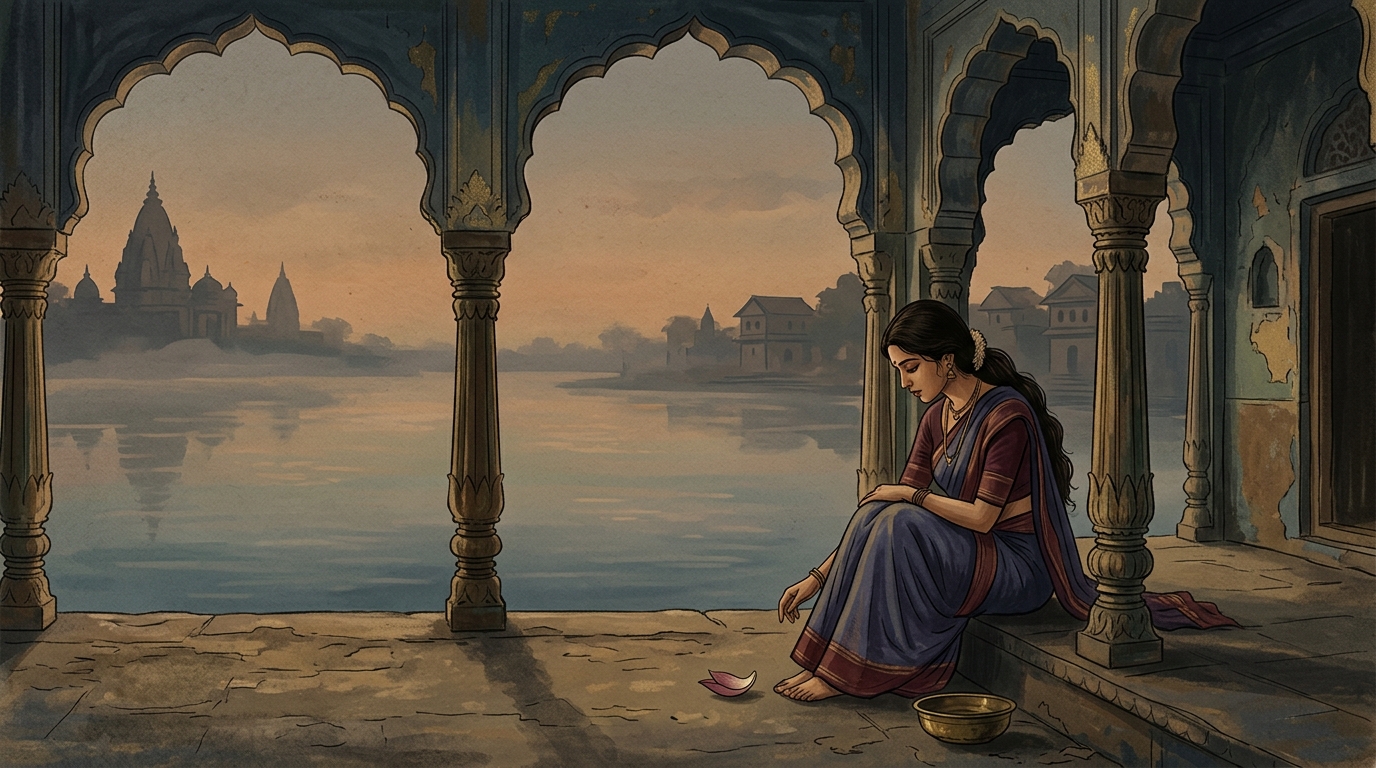
An Introduction to Mir Taqi Mir's World of Sorrow
In the vast ocean of Urdu poetry, few names evoke the profound tenderness of emotion quite like Mir Taqi Mir. Often hailed as 'Khuda-e-Sukhan' (God of Poetry), Mir's verses are an intimate exploration of the human heart, particularly its capacity for enduring sorrow and delicate heartbreak. His unique ability to articulate pain with such nuance makes his work timeless, speaking directly to souls across centuries.
Why Mir Taqi Mir is the Bard of Heartbreak
Mir Taqi Mir is not merely a poet of sadness; he is a chronicler of the subtle art of heartbreak. His poetry doesn't just describe sorrow; it embodies it, inviting the reader to experience the sting of separation, the ache of unfulfilled longing, and the quiet dignity of enduring emotional wounds. He perfected the ghazal form to convey the complexities of love's tribulations, making every tear shed in his verses feel intensely personal yet universally understood. It is this delicate touch, this profound empathy, that sets Mir apart as an unparalleled master of emotional expression.
The Burden of Waiting: A Restless Heart
Mir often explores the agony of anticipation and the inner turmoil it brings. Consider this poignant couplet:
यक निगह को वफ़ा न की गोया
मौसम-ए-गुल सफ़ीर-ए-बुलबुल था
English: As if I had not kept faith with my own eyes,
I was the season of flowers, the ambassador of the nightingale.
This couplet, taken from the ghazal 'ता-ब मक़्दूर इंतिज़ार किया', perfectly captures the essence of prolonged waiting. Mir describes a heart that has exhausted its capacity for patience, having waited 'as long as possible' (*ta-b maqdūr*). The subsequent line reveals a transformation: this endurance doesn't bring peace, but a new, 'restless strength' (*zor be-qarār*). It's a strength born not of resolution, but of an unyielding, agitated longing, a testament to how heartbreak can both wear one down and infuse one with a weary, persistent energy.
Helplessness in Separation: The Stalled Journey
The feeling of being stuck, unable to reach what one desperately desires, is another recurring theme in Mir's expressions of heartbreak. This is beautifully illustrated here:
मैं पा-शिकस्ता जा न सका क़ाफ़िले तलक
आती अगरचे देर सदा-ए-जरस रही
English: I could not reach the caravan's foot, even if the sound of the bell continued forever.
From the ghazal 'अब के भी सैर-ए-बाग़ की जी में हवस रही', this couplet paints a vivid picture of a 'broken-footed' (*pā-shikastā*) lover who cannot join the departing 'caravan' (*qāfile*). Despite hearing the persistent 'sound of the bell' (*sadā-e-jaras*) signaling its movement, the physical inability to move traps the protagonist in a state of agonizing separation. It's a powerful metaphor for the paralysis heartbreak can induce, where the world moves on, but the individual remains rooted in their sorrow, listening to the fading echoes of what they've lost.
The Sting of Misunderstanding and Betrayal
Heartbreak isn't always about absence; it can also stem from the pain of misunderstanding, false accusations, and the feeling of being wronged by the beloved. Mir articulates this specific anguish:
कब कब तुम ने सच नहीं मानीं झूटी बातें ग़ैरों की
तुम हम को यूँ ही जलाए गए वे तुम को वो हैं लगाए गए
English: When, when did you not accept the false words of strangers?
In this couplet from the ghazal 'क्या क्या बैठे बिगड़ बिगड़ तुम पर हम तुम से बनाए गए', Mir confronts the beloved with a series of rhetorical questions, highlighting their propensity to believe 'false words of strangers' (*jhooṭī bāteñ ghairon kī*) over the truth of the lover's devotion. The implicit accusation of betrayal and the pain of being 'burned' (*jalāye gaye*) by these misunderstandings add another layer to Mir's delicate portrayal of heartbreak – one that involves not just separation, but the laceration of trust and truth.
The Suffocation of Inner Turmoil
Sometimes, heartbreak manifests as an intense internal pressure, a feeling of being stifled by one's own emotions. Mir gives voice to this suffocating experience:
रुका जाता है जी अंदर ही अंदर आज गर्मी से
बला से चाक ही हो जावे सीना टुक हवा आवे
English: My heart feels restless with the heat today,
As if my chest would split open with a gust of wind.
This vivid couplet from the ghazal 'कहाँ तक ग़ैर जासूसी के लेने को लगा आवे' describes a heart or soul (*jī*) that feels 'stifled within' (*andar hī andar*) by an internal 'heat' (*garmi*). The desire for relief is so intense that the poet wishes for his chest (*sīnā*) to 'split open' (*cāk ho jāve*) just for 'a bit of air' (*ṭuk havā āve*). It’s a powerful and raw expression of emotional claustrophobia, where the pain is so profound it feels physically constricting, yearning for any release, even if it means self-destruction.
Cultural and Historical Context: A Mirror to a Fading Era
Mir Taqi Mir lived through a tumultuous period in 18th-century Delhi, witnessing the decline of the Mughal Empire and the subsequent societal chaos. Many literary critics interpret the profound melancholy and sense of loss in his poetry as not merely personal romantic sorrow, but also a reflection of the collective pain and desolation of his era. The fragility of love and life described in his ghazals resonated deeply with a populace experiencing political instability and cultural upheaval. His personal *dard* (pain) often became a metaphor for the universal *dard* of his surroundings, embedding his heartbreak within a broader historical tapestry.
Modern Interpretation: The Universal Echo of Sorrow
Despite being centuries old, Mir's poetry continues to resonate profoundly with modern audiences. The feelings of longing, separation, betrayal, and the quiet endurance of pain are universal human experiences, untouched by time or geography. In a world increasingly fragmented, Mir's verses offer solace and understanding, reminding us that emotional vulnerability is a shared human condition. His delicate articulation of heartbreak serves as a bridge, connecting contemporary readers to a timeless wellspring of human emotion, proving that some sorrows, like true art, are eternal.