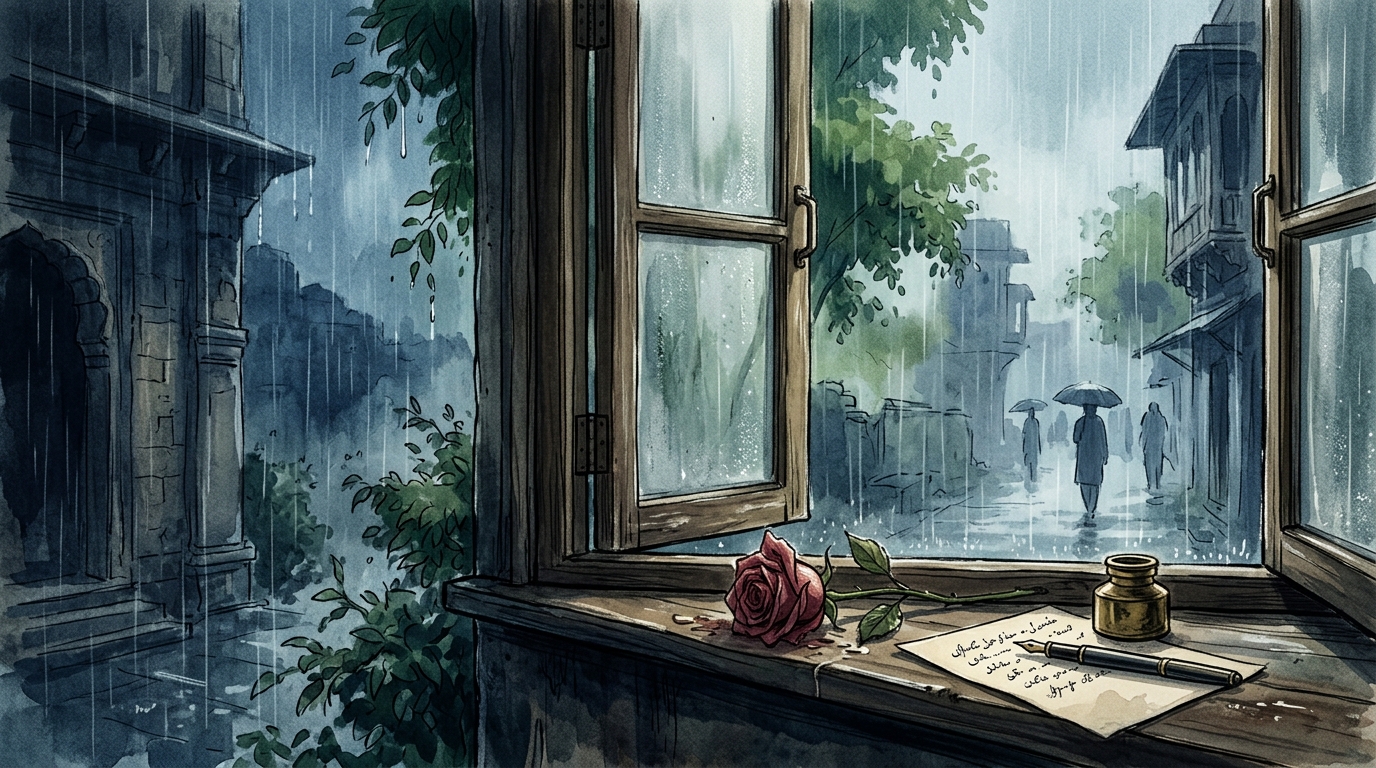
The Rhythmic Embrace of Monsoon in Poetry
The monsoon season, with its dramatic skies, torrential downpours, and the scent of wet earth, has always held a special place in the hearts of poets across the Indian subcontinent. It's more than just a change in weather; it's a profound atmospheric shift that awakens deep emotions—longing, nostalgia, melancholy, and sometimes, a bittersweet joy. In ghazal poetry, rain often serves as a powerful metaphor for tears, separation, or the overwhelming intensity of love, transforming the natural phenomenon into a mirror of the soul's intricate landscape. This collection delves into how rain and monsoon inspire verses that resonate with our deepest feelings.
Why Rain Poetry Matters
Rain poetry, particularly monsoon ghazals, matters because it encapsulates universal human experiences of connection and isolation, hope and despair, all framed within a culturally resonant backdrop. The rhythmic patter of raindrops, the dark, brooding clouds, and the sudden chill in the air create a sensory environment that enhances emotional narratives. For centuries, poets have tapped into this natural drama to explore themes that remain timeless and relatable: the pain of separation from a beloved, the ache of memory, or the yearning for an unspoken desire. It allows readers to find solace and understanding in shared human sentiments.
Key Texts: Voices of Longing and Despair
Many master poets have immortalized the mood of rain in their works. One poignant example comes from the legendary Mir Taqi Mir, whose verses often delve into the agony of love and existence. Consider this couplet that speaks to an overwhelming emotional state, often amplified by a somber atmosphere like a rainy day:
"रखता है सोज़-ए-इश्क़ से दोज़ख़ में रोज़-ओ-शब
ले जाएगा ये सोख़्ता-दिल क्या बहिश्त में"
This translates to: "With the agony of love, it keeps me in hell day and night, Will this burning heart take me to paradise?" (Couplet ID: mir-taqi-mir-ghazals-112-mir-ghazals--002). Here, the intense suffering of the heart, akin to being in a perpetual hell, resonates with the melancholic introspection that rain often brings.
The Metaphor of Tears and Rain
The imagery of rain often seamlessly blends with that of tears, making it a powerful vehicle for expressing sorrow and vulnerability. Mirza Ghalib, another titan of Urdu poetry, masterfully wove these themes together. Reflect on this verse from his collection:
"जराहत-दोज़ी-ए-'आशिक़ है जा-ए-रहम डरता हूँ
कि रिश्ता तार-ए-अश्क-ए-दीदा-ए-सोज़न न हो जावे"
Translated, it means: "The stitching of the lover's wounds is a cause for pity; I fear the thread may be a tear-strand from the needle's eye." (Couplet ID: khatar-hai-rishta-e-ulfat-rag-e-gardan-na-ho-jaave-mirza-ghalib-ghazals--004). This couplet beautifully illustrates how tears, like rain, can become an overwhelming force, blurring the lines between external elements and internal pain. The fragility of the lover's condition is heightened by the visual of tears being the very thread that attempts to mend wounds.
Emotional Meaning: The Ache of Separation
Rain often acts as a catalyst for memory and longing, particularly for a distant beloved. The absence feels more pronounced when the world outside weeps with the clouds. Mir Taqi Mir captures this profound sense of yearning and incompleteness beautifully in another sher:
"तुझ बिन दिमाग़ सोहबत-ए-अहल-ए-चमन न था
गुल वा हुए हज़ार वले हम न वा हुए"
This translates to: "Without you, the company of the garden's people was empty, Though a thousand roses bloomed, I did not bloom." (Couplet ID: mir-taqi-mir-ghazals-184-mir-ghazals--004). This couplet evokes the sense of desolation even amidst beauty, a feeling often intensified during the monsoon when the vibrancy of nature contrasts sharply with the emptiness in one's heart due to separation.
Cultural and Historical Context of Monsoon Poetry
For centuries, the monsoon has been a cornerstone of South Asian life and culture, dictating agricultural cycles, festivals, and daily rhythms. In poetry, this deep cultural significance translates into a rich tradition where rain is not just weather but a character in itself—a messenger, a confidante, or a harbinger of change. Historically, poets observed the monsoon as a time of introspection and heightened emotion, often composing verses in royal courts or literary gatherings, sharing the collective sentiment of waiting for the beloved, or reflecting on life's ephemeral nature against the backdrop of constant change. This deep historical connection ensures that monsoon poetry continues to resonate across generations.
Modern Interpretation: Rain as a Mirror to the Soul
In contemporary times, the essence of monsoon ghazals remains powerfully relevant. While the societal context may have evolved, the fundamental human emotions of longing, memory, and the search for solace endure. Modern readers can connect with these verses as a reflection of their own internal landscapes, whether it's the quiet introspection on a rainy afternoon, the melancholy evoked by a distant memory, or the profound sense of connection to nature's rhythms. The rain becomes a canvas not just for historical narratives but for our own present-day feelings, offering a moment of pause and reflection in a bustling world.
Listen to the Rains and the Rhymes
To truly appreciate the depth of monsoon ghazals, immerse yourself in their sonic beauty. Many classical ghazal renditions by legendary artists bring these verses to life, allowing the listener to feel the pathos and passion embedded within the words. Seek out audio recordings of ghazals by Mir Taqi Mir and Mirza Ghalib on platforms like Sukhan AI, where the nuanced delivery and musicality amplify the emotional resonance of the rain-soaked verses. Let the melodies transport you to the heart of monsoon's poetic charm, experiencing the fusion of rain, longing, and memory.