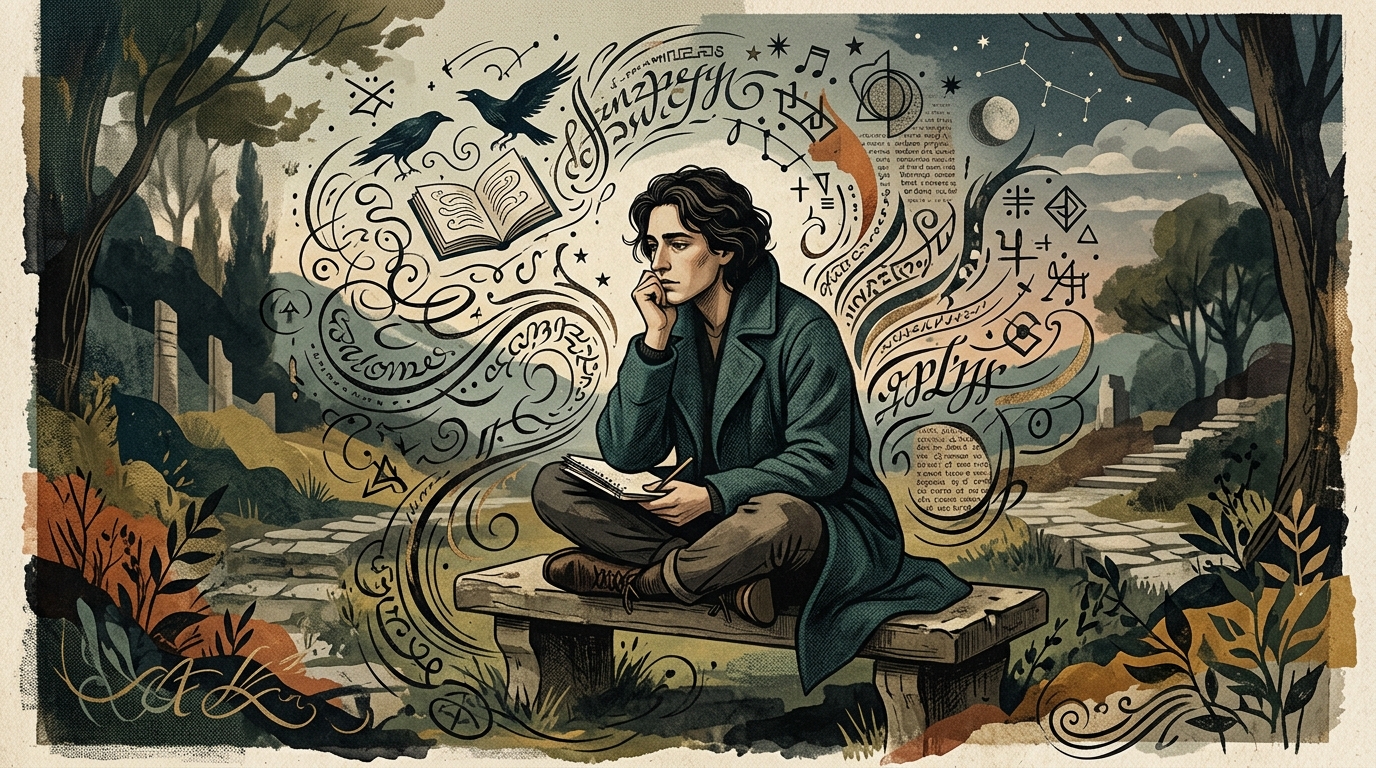
The Labyrinth of Ghalib's Genius
Mirza Ghalib, a name synonymous with Urdu poetry, is revered for his intellectual depth and emotional resonance. Yet, many of his ghazals are famed for their intricate structure, layered meanings, and philosophical conundrums, often leaving modern readers bewildered. This guide aims to illuminate some of his most complex couplets, offering a pathway through the perceived difficulty to the heart of his timeless wisdom. Understanding Ghalib’s challenging verses isn't just an academic exercise; it's an invitation to explore profound human experiences, intricate thought, and the sheer beauty of language.
Why Ghalib's Complexity Matters
Ghalib's ability to compress worlds of meaning into a few lines is what truly sets him apart. His ghazals are not mere expressions of sentiment; they are philosophical treatises, social commentaries, and emotional landscapes, all wrapped in exquisite poetic artistry. For modern readers, delving into these complex works offers a unique blend of intellectual stimulation and emotional catharsis. It's a journey that sharpens the mind and touches the soul, revealing why his poetry continues to influence generations of poets and thinkers.
Exploring Paradox and Devotion: 'Masjid ke zer-e-sāya'
One of Ghalib's striking couplets challenges conventional piety and suggests an alternative path to spiritual solace:
"मस्जिद के ज़ेर-ए-साया ख़राबात चाहिए
भौं पास आँख क़िबला-ए-हाजात चाहिए"
Here, Ghalib provocatively suggests, 'Beneath the mosque's shade, let taverns now arise; The eye near the brow, our Qibla for all desires.' This couplet plays with the irony of seeking spiritual fulfillment in places traditionally deemed unholy. The 'taverns' (kharaabaat) often symbolize a place of freedom from conventional restrictions, where one might find a different kind of truth. The second line, 'The eye near the brow, our Qibla for all desires,' is equally profound, implying that true worship and direction (Qibla) can be found within oneself, through deep introspection, rather than solely in external rituals or directions. It champions an internal, individual path to the divine.
The Irony of Compassion: 'Dost gham-khwaari mein meri'
Ghalib often used irony to convey a deeper sense of despair or skepticism. Consider this couplet:
"दोस्त ग़म-ख़्वारी में मेरी सई फ़रमावेंगे क्या
ज़ख़्म के भरते तलक नाख़ुन न बढ़ जावेंगे क्या"
This translates to, 'What efforts will my friends make to alleviate my sorrow? Ere my wounds can heal, will not my nails grow long again?' Ghalib questions the effectiveness of his friends' attempts to console him. He suggests that by the time their efforts might bear fruit, new 'wounds' (troubles) will have emerged, symbolized by the growing nails that can scratch and reopen old wounds. It's a poignant expression of the unending nature of suffering and the futility of temporary solace, highlighting a profound sense of isolation and enduring pain.
Abstract Anguish: 'Hairat-farosh-e-sad-nigrani'
Ghalib's abstract imagery can be particularly challenging. Take this verse:
"हैरत-फ़रोश-ए-सद-निगरानी है इज़्तिरार
सर-रिश्ता चाक-ए-जेब का तार-ए-नज़र है आज"
This couplet, 'Restlessness is the vendor of a hundred watchful gazes; Today, the thread of my torn collar is the very thread of sight,' is rich in metaphor. 'Restlessness' (iztirar) is personified as a vendor, selling 'a hundred watchful gazes,' implying that in a state of agitation, every glance becomes acutely aware and filled with wonder or anxiety. The second line paints a vivid picture of extreme distraction: the thread from a torn collar (a sign of disarray or passion) has become the 'thread of sight,' suggesting that the very essence of vision is now fragmented and lost in disquiet. It beautifully captures a mind overwhelmed by inner turmoil, where even basic perception is affected by deep unrest.
Cosmic Melancholy: 'Le zameen se aasmaan tak'
Sometimes Ghalib's scope extends to the cosmic, describing a universal sense of unease:
"ले ज़मीं से आसमाँ तक फ़र्श थीं बेताबियाँ
शोख़ी-ए-बारिश से मह फ़व्वारा-ए-सीमाब था"
This couplet evokes a grand, melancholic scene: 'From earth to sky, restlessness formed a carpet wide, The moon, a fountain of quicksilver, by rain's mischief plied.' Ghalib describes an overwhelming sense of 'restlessness' (betaabiyan) that blankets everything from the earth to the sky. The moon, usually a symbol of calm, is depicted as a 'fountain of quicksilver' (favvaara-e-seemaab) agitated by the 'mischief' (shokhi) of rain. This imagery suggests a universe consumed by an almost playful yet profound unrest, reflecting the poet's own internal disquiet on a grand scale. It speaks to a deep, pervasive sense of agitation that permeates both the internal and external worlds.
The Emotional Resonance
Beyond the intellectual challenge, Ghalib's difficult ghazals carry immense emotional weight. They often explore themes of unrequited love, the pain of separation, existential angst, and the fleeting nature of life, yet with a unique philosophical detachment. His ability to articulate these universal feelings through complex metaphors allows readers to connect with him on a deeper, more reflective level, finding solace or understanding in his sophisticated expressions of sorrow and wisdom. His ghazals are a testament to the enduring human condition, felt across centuries.
Cultural and Historical Tapestry
Ghalib's poetry emerged from 19th-century Mughal India, a period of immense cultural efflorescence mixed with political upheaval. His ghazals, while deeply personal, often reflect the intellectual currents and societal norms of his time. His unique choice of words, his innovative use of traditional imagery, and his bold philosophical inquiries set him apart. He broke from conventional poetic structures and themes, pushing the boundaries of what ghazal could convey, making his work both revolutionary and timeless.
Ghalib for the Modern Soul
Even with their historical context and complex language, Ghalib's 'hardest' ghazals offer profound insights relevant to contemporary life. The paradoxes he explores, the questioning of authority, the introspection into human suffering, and the search for authentic meaning resonate powerfully with modern sensibilities. His verses encourage critical thinking, emotional depth, and a nuanced understanding of existence, proving that true poetry transcends time and speaks directly to the human spirit in any era.
Immerse Yourself: An Audio Experience
To truly appreciate the musicality and rhythm of Ghalib's ghazals, listening to them recited or sung by accomplished artists is highly recommended. The subtle nuances of Urdu pronunciation and the emotive power of his verses come alive through vocal renditions, providing another layer of understanding and enjoyment. Many classical and contemporary artists have interpreted Ghalib's work, offering diverse perspectives on his timeless poetry.